
By: Meghann Haisch | Office Manager
High school students are often asked what they want to do with their future. But without opportunities to experience different careers, that can be a difficult question to answer. Through CDA’s High School Internship Program, students step inside a professional architecture and interior design firm, meet people working in different roles, and begin discovering what interests them.
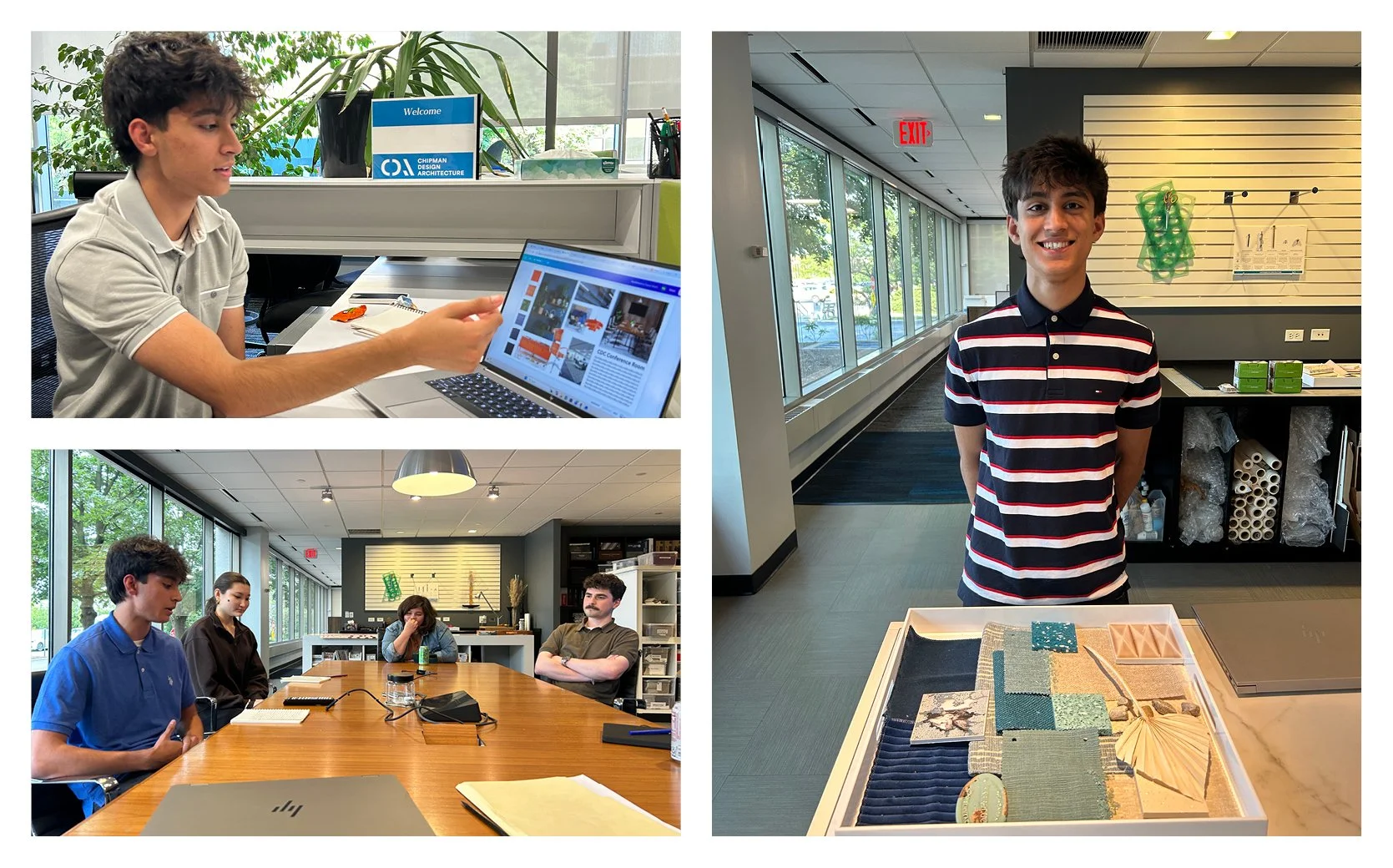
What Do High School Architecture Interns Experience?
A high school architecture internship can introduce students to design technology, material research, project collaboration, professional communication, and the many careers that support the built environment.
At Chipman Design Architecture, students do not stay in one area of the office or complete the same task each week. The program is designed to give them a broader look at how architecture and interior design firms work.
Depending on the day, they may:
Meet one-on-one with CDA team members
Learn about current architecture and design projects
Explore programs such as Revit
Review materials and resources used by designers
Create mood boards
Participate in Town Halls and internal training
Observe how different teams contribute to a project
Even a walk through the materials library or a conversation about a current project can introduce a student to a career they did not know existed.
Exploring Careers in Architecture and Design
One of the reasons I have enjoyed being involved with the program is the opportunity to show students how many people and skills contribute to our work.
Architecture and interior design are only part of the picture. A commercial project can also involve project management, BIM, engineering coordination, material research, graphic communication, marketing, accounting, information technology, and other areas of firm operations.
Throughout the program, interns meet with CDA team members to learn what they do, how they began their careers, and what their daily work actually looks like. Those conversations help students understand that there is no single path into the architecture and design industry.
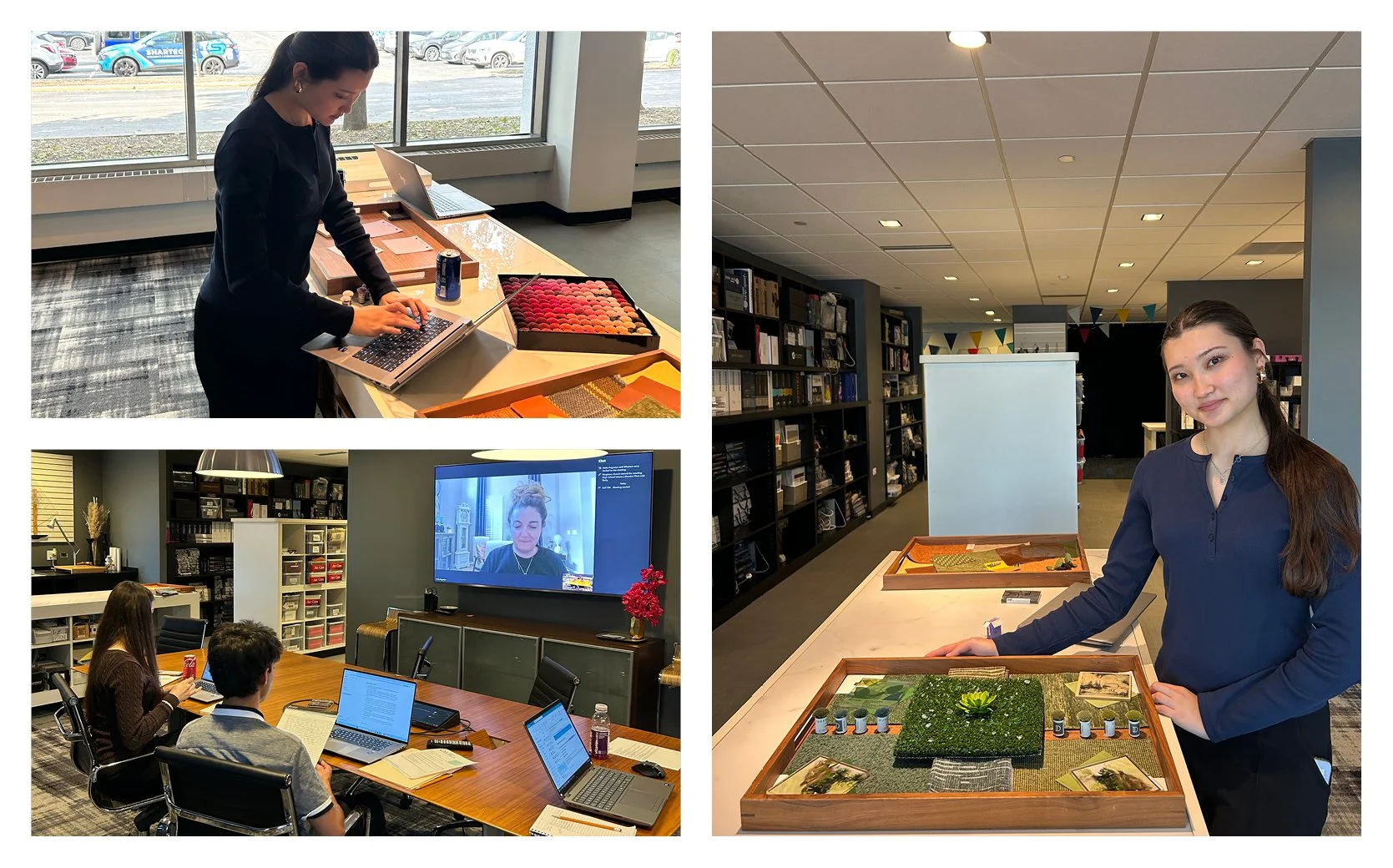
Building Professional Skills and Confidence
Exposure to design tools and project work is only one part of the experience. Students are also learning how to navigate a professional environment.
After meeting with a CDA team member, for example, we encourage interns to send a short thank-you message. It is a simple exercise, but it helps them practice introducing themselves, asking thoughtful questions, following up, and building professional relationships.
For many students, this is their first experience in an office. We want them to feel comfortable asking questions and trying something unfamiliar. Making a mistake or not knowing an answer is part of the process.
Over time, we begin to see their confidence grow.
On the first day, everything feels new: the office, the people, the terminology, Microsoft Teams, and even figuring out what questions to ask. Walking into a professional architecture firm as a high school student can be intimidating.
A few weeks later, students recognize people around the office. They ask more questions, share their ideas, and begin identifying the parts of the experience that interest them most.
What Our Team Learns from Student Interns
The students are not the only ones who benefit from the program.
When a CDA team member explains how they approach their work, they have an opportunity to reflect on their own career and the knowledge they have developed along the way. A thoughtful question from a student can make someone stop and reconsider a process that has become routine.
Those conversations also remind us that the terminology and tools we use every day were once new to us. Sharing that knowledge gives our team an opportunity to support someone who is only beginning to imagine where they might fit within the industry.
Helping Students See New Possibilities
We do not expect interns to leave CDA knowing exactly what they want to do for the rest of their lives. They have plenty of time to make those decisions.
The goal is for them to leave knowing more about architecture and design, more about working in a professional environment, and perhaps a little more about themselves.
If a student discovers a new interest, becomes more comfortable asking questions, or has a moment when they think, “I didn’t know that was something I could do,” the program has done something worthwhile.
Mentorship does not have to begin after someone starts a career. Sometimes it begins by giving a student the opportunity to see what that career can look like.
Meghann Haisch is the Office Manager at CDA, where she supports team members through operational excellence, event coordination, permit management, and culture-building initiatives. With 26 years of experience in healthcare, including roles as a first responder and transplant unit professional, she brings a unique combination of compassion, organization, and problem-solving to the CDA team.
