
48 Hours of Design Inspiration in Paris
By: Lauren Chipman | CEO
One of my favorite things about traveling is seeing how people experience retail, restaurants and hospitality in different parts of the world.
During a recent trip to Paris, I packed a lot into 48 hours. Some destinations were intentional, including La Galerie Dior, Dover Street Market, Hermès and Le Bon Marché. Others were discovered while wandering through the Marais or stopping for lunch between museum visits.
What I came home with wasn't a list of design trends. Instead, I found myself thinking about how thoughtfully brands use architecture, visual merchandising and sensory experiences to create places people want to spend time in.
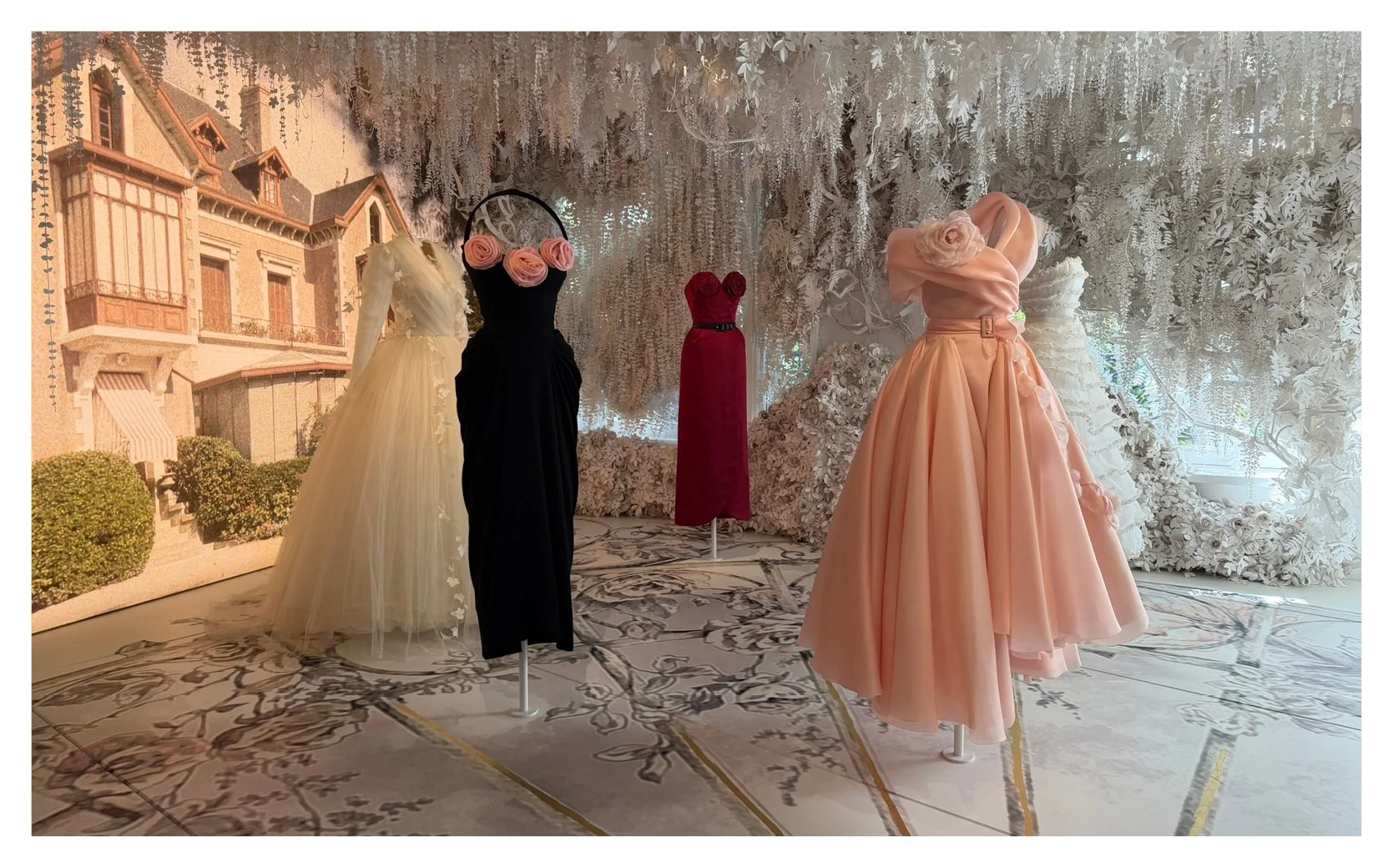
La Galerie Dior
When the Building is Part of the Story
One thing Paris does exceptionally well is preserve and celebrate its architectural history.
The Hermès store on Rue de Sèvres is a perfect example. The boutique occupies what was once the Piscine Lutetia, an Art Deco swimming pool built in the 1930s. Rather than disguising the building's past, Hermès embraced it. Three enormous woven wood structures sit inside the former pool, creating a dramatic, and private, backdrop for the merchandise while allowing visitors to still understand the original volume and scale of the space.
I saw a similar respect for history at Le Bon Marché. Originally expanded in the late nineteenth century with contributions from Gustave Eiffel and engineer Armand Moisant, the department store still feels remarkably modern. The soaring glass ceilings, exposed metal structure and later additions, including Andrée Putman's sculptural escalators, create an environment that feels both historic and contemporary at the same time.
In both spaces, the original architecture isn't treated as something to work around. It's part of the experience, sitting comfortably alongside contemporary retail design.
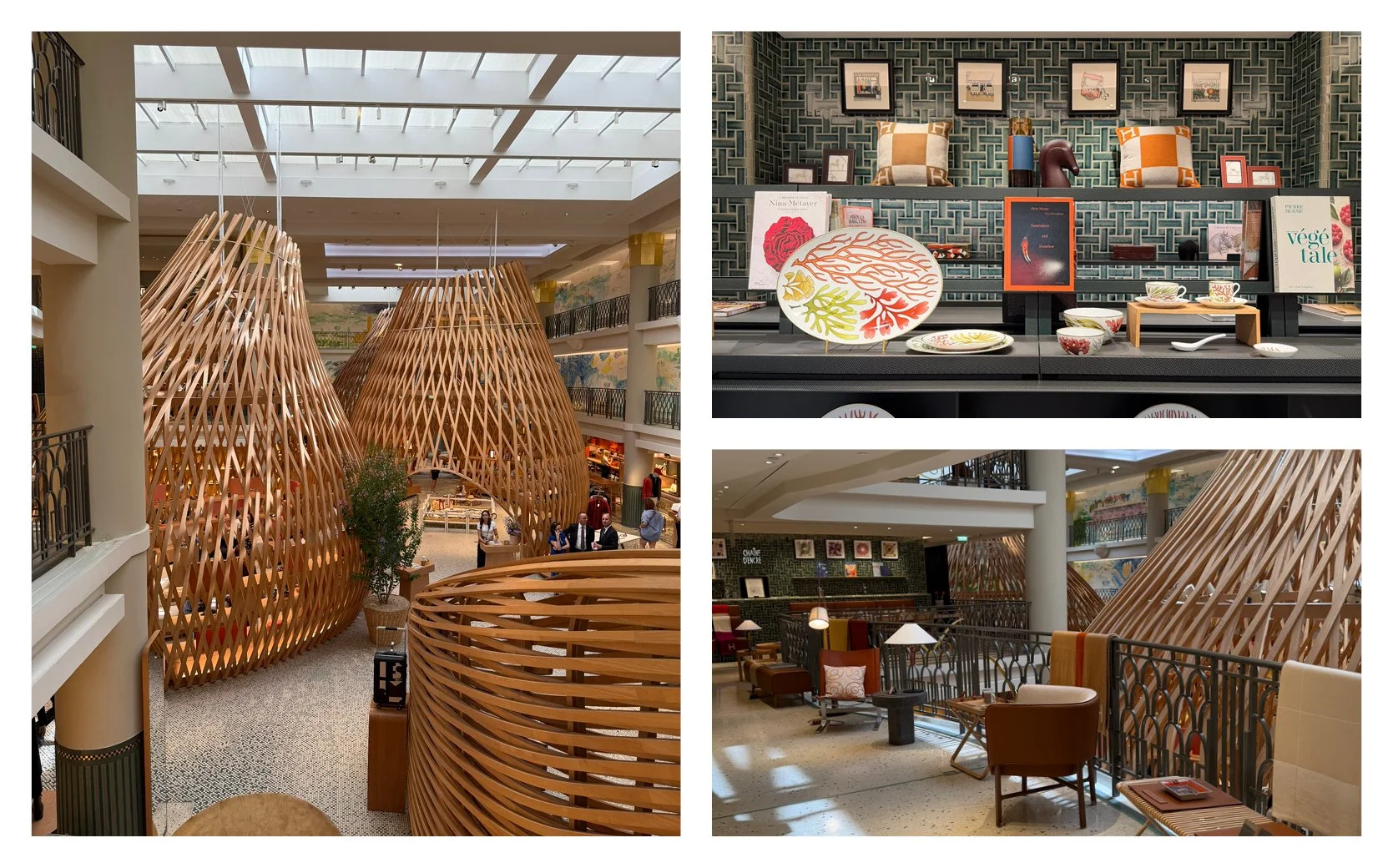
The Hermès store on Rue de Sèvres
Retail as Curation
What struck me most across nearly every luxury environment I visited was the amount of restraint. In the United States, retail often gravitates toward maximizing assortment and inventory visibility. In Paris, I noticed the opposite.
I found myself paying as much attention to the merchandising as the architecture. Many of the stores carried far fewer SKUs on the floor than you might expect, relying instead on thoughtful displays and strong styling to create a sense of value and desirability.
At Repetto's flagship on Rue de la Paix, ballet is present throughout the store. Pointe shoes, ribbons and references to the Paris Opera reinforce the brand's heritage, while the displays themselves remain elegantly understated. It feels less like a shoe store and more like an extension of the brand's history.
Connected to Le Bon Marché, La Grande Épicerie takes something as ordinary as grocery shopping and turns it into a destination. Natural light pours through the central glass atrium, drawing visitors into the heart of the space where food, dining, housewares and retail intersect. Every department feels carefully considered, from the market-style product displays to the elevated furniture vignettes located on the third floor.
What stood out to me was how much attention was given to presentation. Whether it was fresh produce, pastries or packaged goods, each category was treated with the same level of care you might expect in a luxury boutique.
These experiences reminded me that visual merchandising is often just as important as architecture when shaping how customers perceive value.
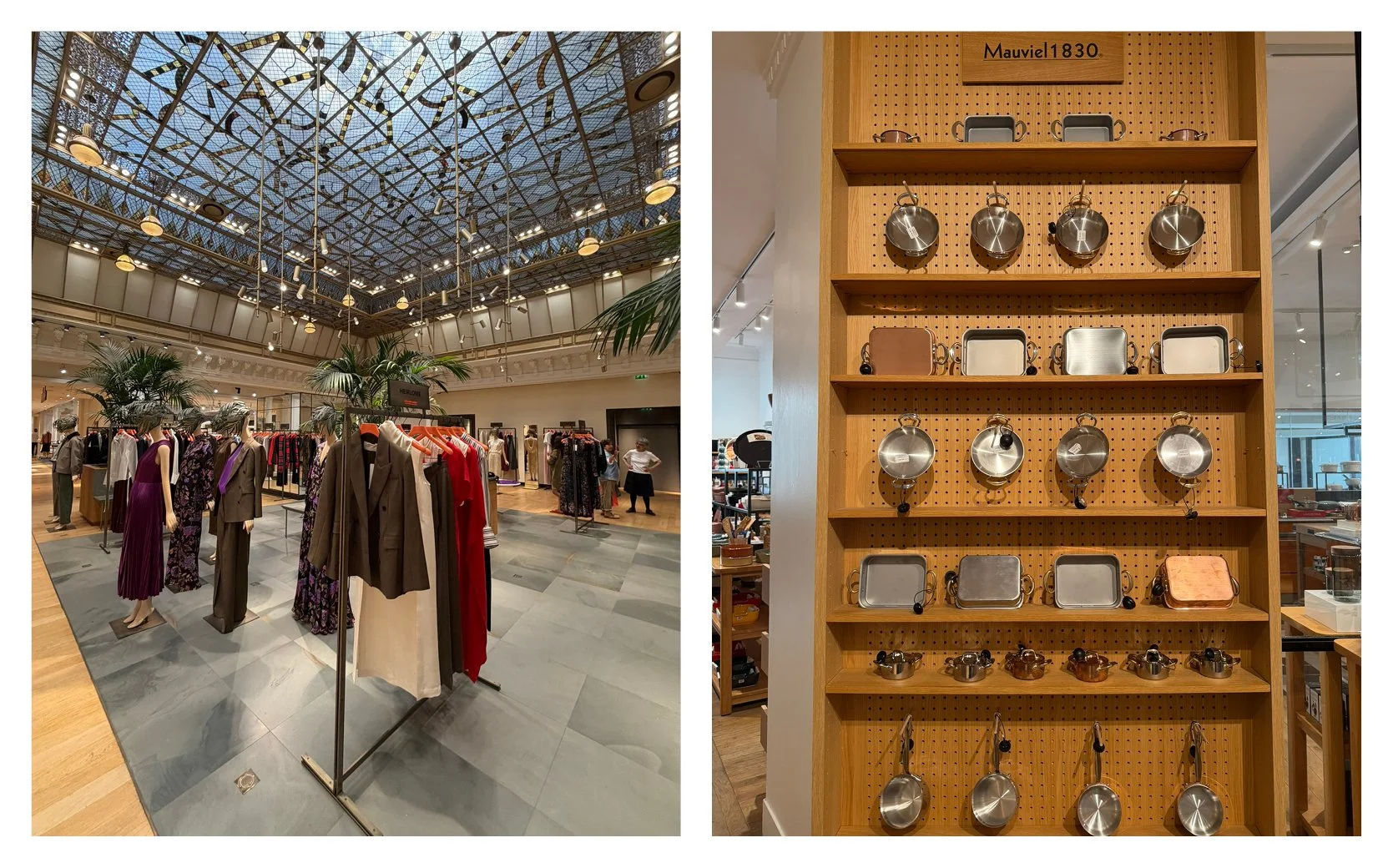
La Grande Épicerie
Creating a Sense of Discovery
Dover Street Market could not have been more different from the luxury flagships, yet it was equally memorable.
Located within a seventeenth-century mansion in the Marais, the store blends contemporary designers, Comme des Garçons collections and luxury brands without the traditional boundaries most retailers rely on. There are no obvious shop-in-shops and very little guidance about where to go next.
Even from the street, the experience begins differently. Merchandise isn't visible from the sidewalk. Visitors must enter the courtyard before discovering what's inside.
In a retail environment where we're often focused on speed and convenience, it was interesting to see a concept that rewards curiosity instead.
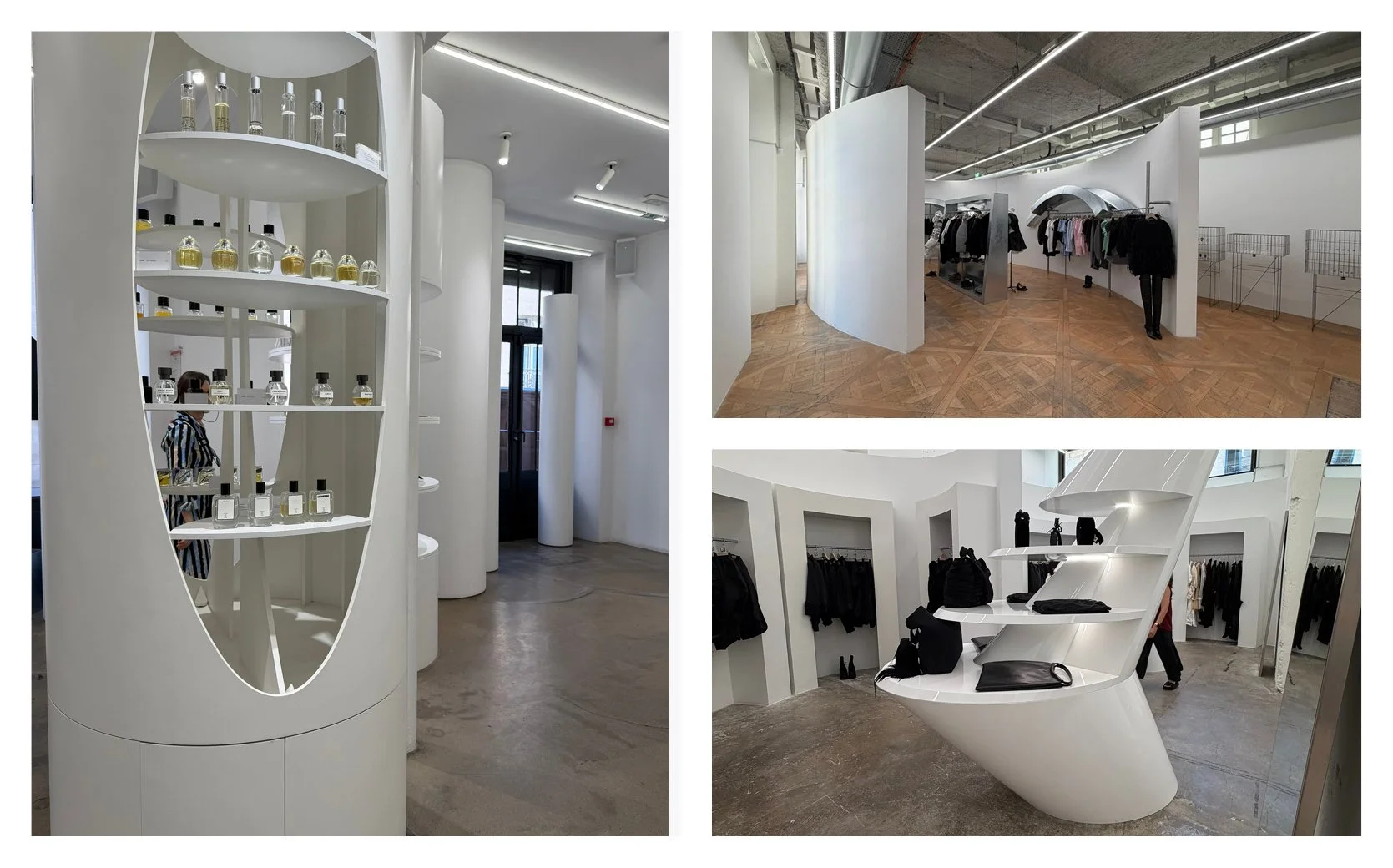
Dover Street Market
The Value of Immersion
La Galerie Dior was one of the most impressive brand experiences I visited.
The museum traces the history of the House of Dior through a series of immersive rooms that showcase the evolution of the brand, its designers and its craftsmanship. While the fashion itself is beautiful, what stayed with me most was the way the museum reveals the work behind it.
White canvas toiles, preserved workspaces and displays focused on the design process help visitors understand the craftsmanship required to create haute couture. The experience celebrates not only the finished product but the people and processes behind it.
For brands looking to build deeper connections with customers, there is a lesson in that transparency.
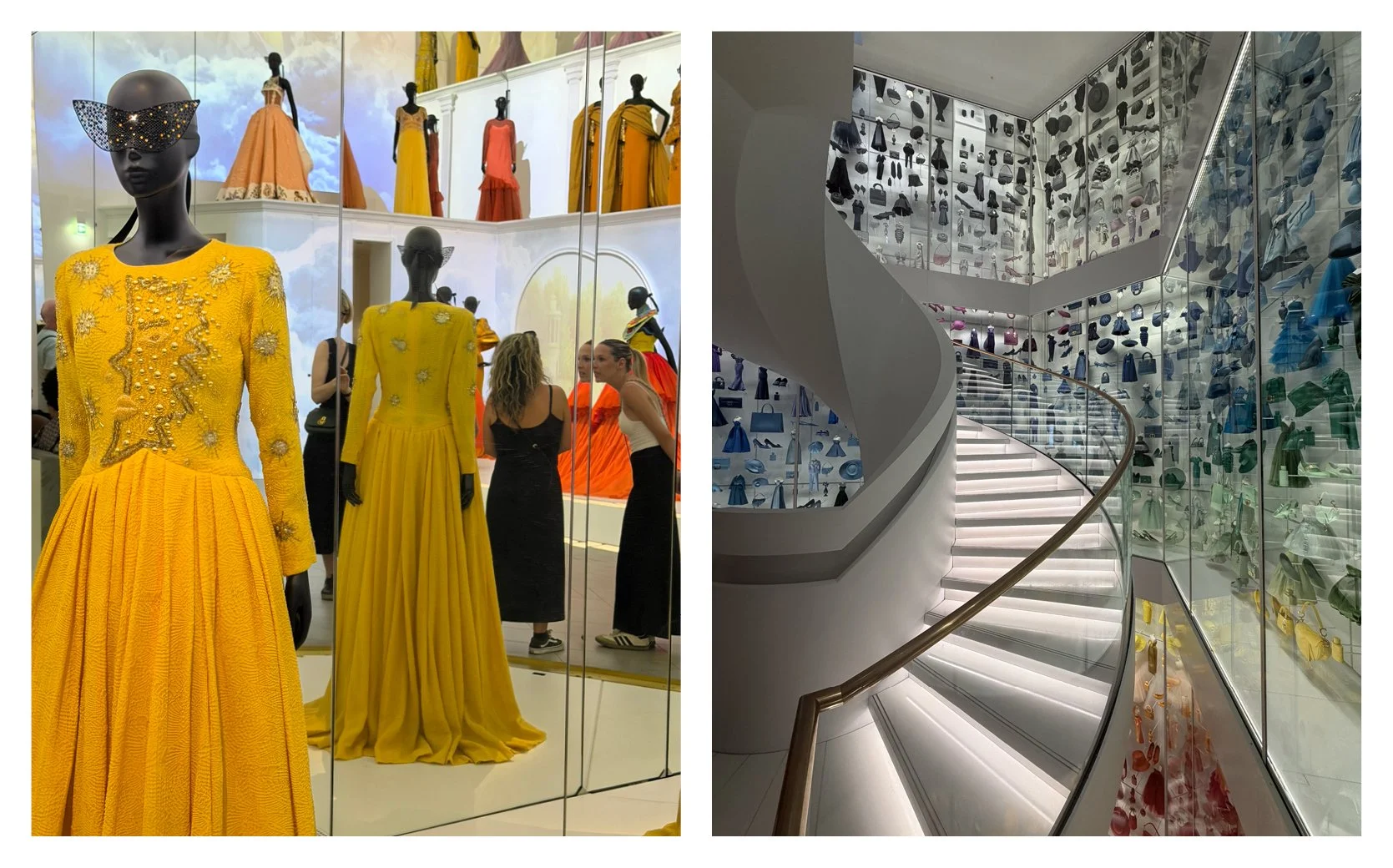
La Galerie Dior
Hospitality That Rewards Exploration
Perhaps my favorite hospitality experience was Brasserie des Prés in the Latin Quarter.
At first glance, it feels like a classic Paris brasserie. But as you move through the building, the restaurant continues to reveal itself. A library-like dining room, shelves filled with antiques, a vinyl listening area and a hidden cocktail bar each create a slightly different experience.
The restaurant feels layered rather than themed. Every floor gives guests a reason to stay a little longer and look a little closer.
As designers, we often talk about creating memorable experiences. Brasserie des Prés reminded me that sometimes the most memorable moments come from discovering something you weren't expecting to find.
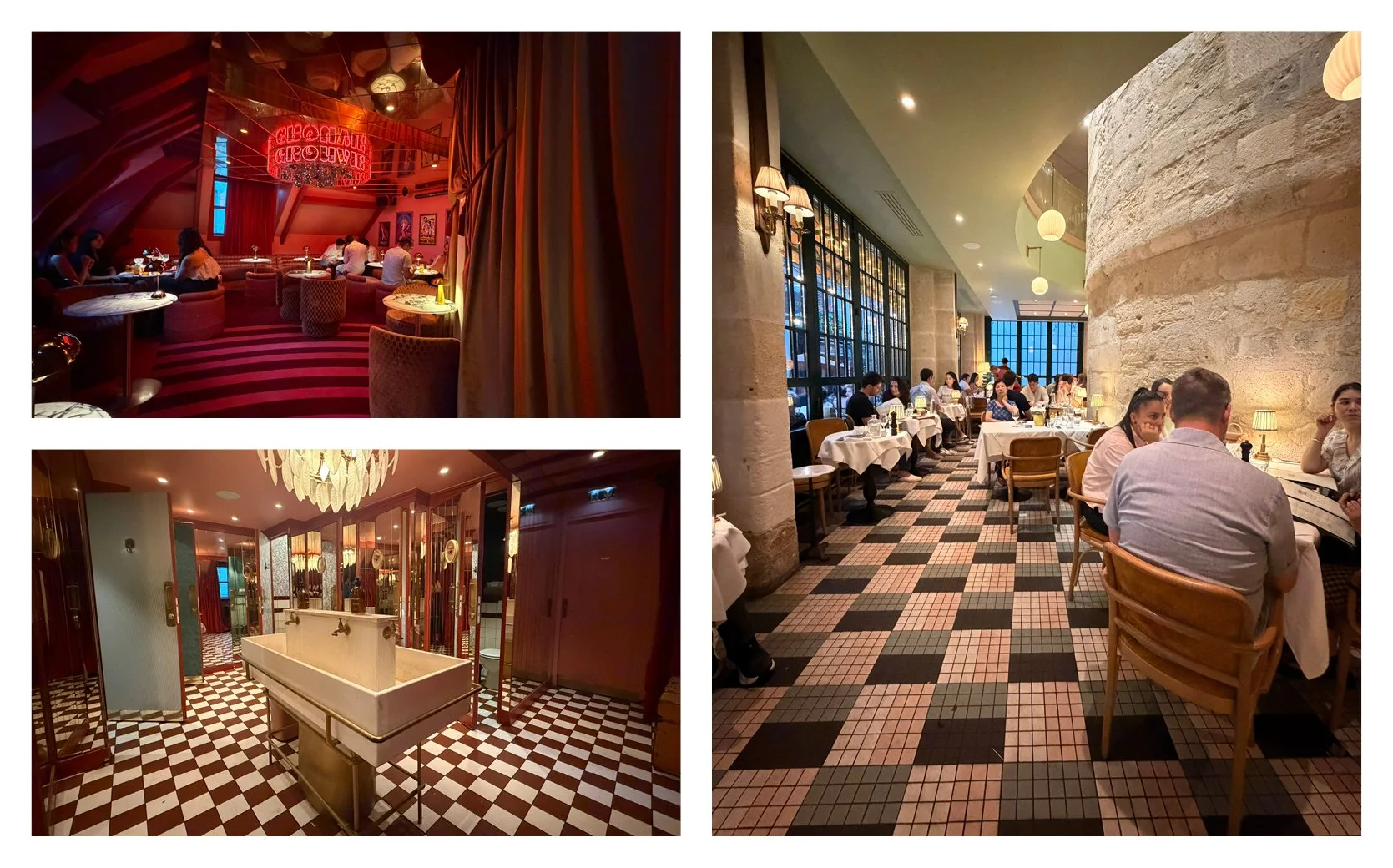
Brasserie des Prés in the Latin Quarter
Final Thoughts
The biggest takeaway from my time in Paris was not a particular material, fixture or design trend.
It was seeing how successfully brands and operators balance history, storytelling and experience.
Whether it was a former swimming pool transformed into a luxury flagship, a centuries-old building housing one of the world's most unconventional retailers or a restaurant filled with hidden moments waiting to be discovered, the most successful spaces felt deeply connected to where they were and what they stood for.
That sense of authenticity is difficult to manufacture, but when it's done well, it's what people remember long after they leave.
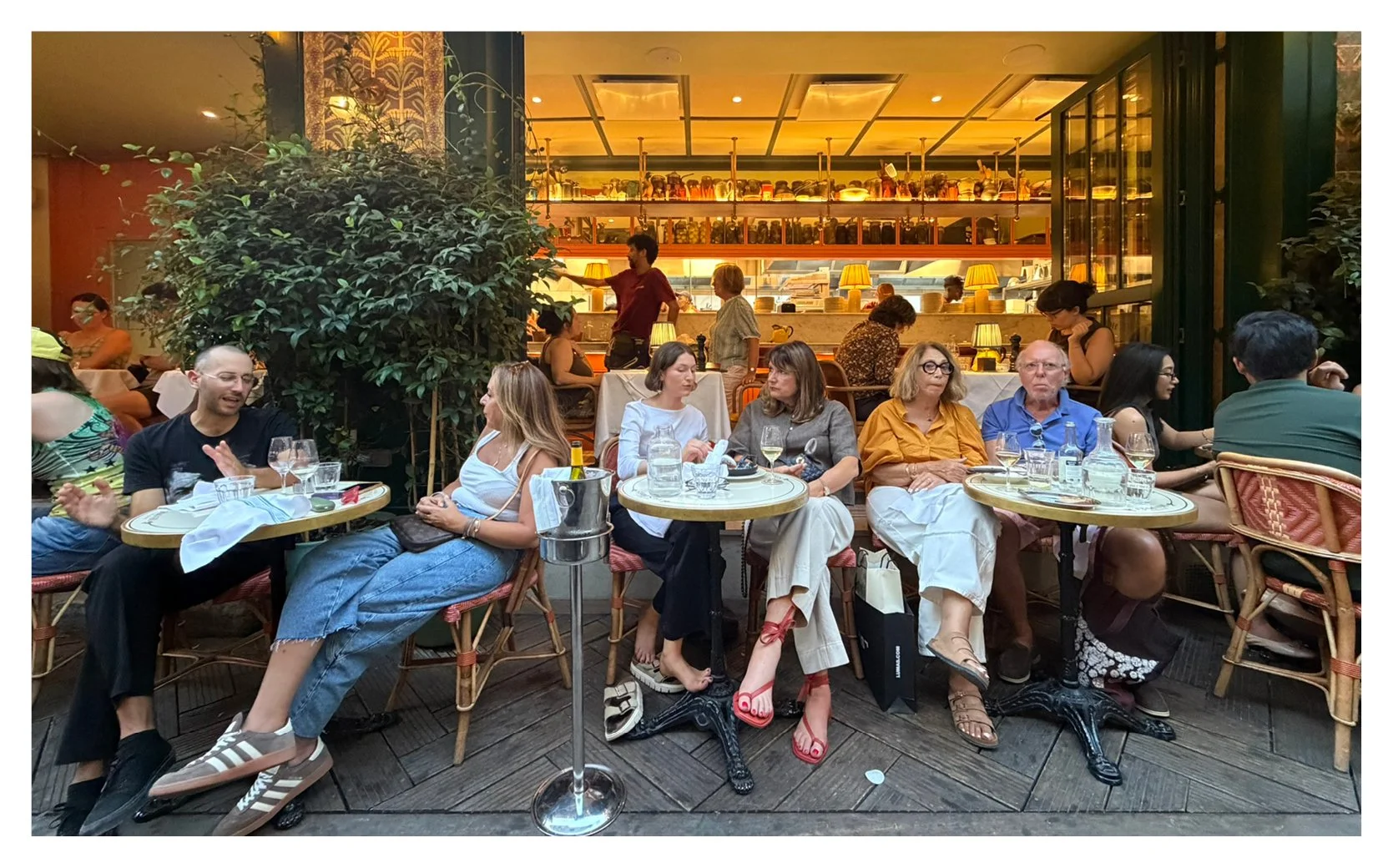
Outdoor Cafe at Brasserie des Prés in the Latin Quarter
Lauren Chipman is the Chief Executive Officer of Chipman Design Architecture, where she provides creative leadership for one of the nation’s most established commercial architecture and design firms. A true multi‑disciplinary designer and former performing artist, Lauren brings an unconventional and forward‑thinking perspective to architecture, branding, and the built environment.
Before joining Chipman Design Architecture, Lauren built a successful career as a professional stringed instrumentalist, recording for television, film, and top Billboard artists. That background deeply informs her approach to design leadership today. Her ability to blend creativity with structure allows her to guide complex hospitality, retail, and restaurant projects with both vision and precision.
As a third‑generation leader of a family‑owned firm, Lauren is proud to carry on Chipman Design Architecture’s legacy while continuously pushing it forward. Under her leadership, the firm supports national and global brands including Chick‑fil‑A, Jeni’s Splendid Ice Creams, Ulta Beauty, and Whole Foods Market. Lauren’s entrepreneurial mindset extends beyond traditional architectural practice, emphasizing innovation, adaptability, and long‑term relevance.
Lauren actively integrates emerging technology into the conceptual design process and champions the recruitment of multi‑hyphenate talent with diverse professional backgrounds. By leveraging her experience as an industry outsider, she fosters a culture that values curiosity, inclusivity, and cross‑disciplinary collaboration. The result is a design practice that is both deeply experienced and future‑focused.
